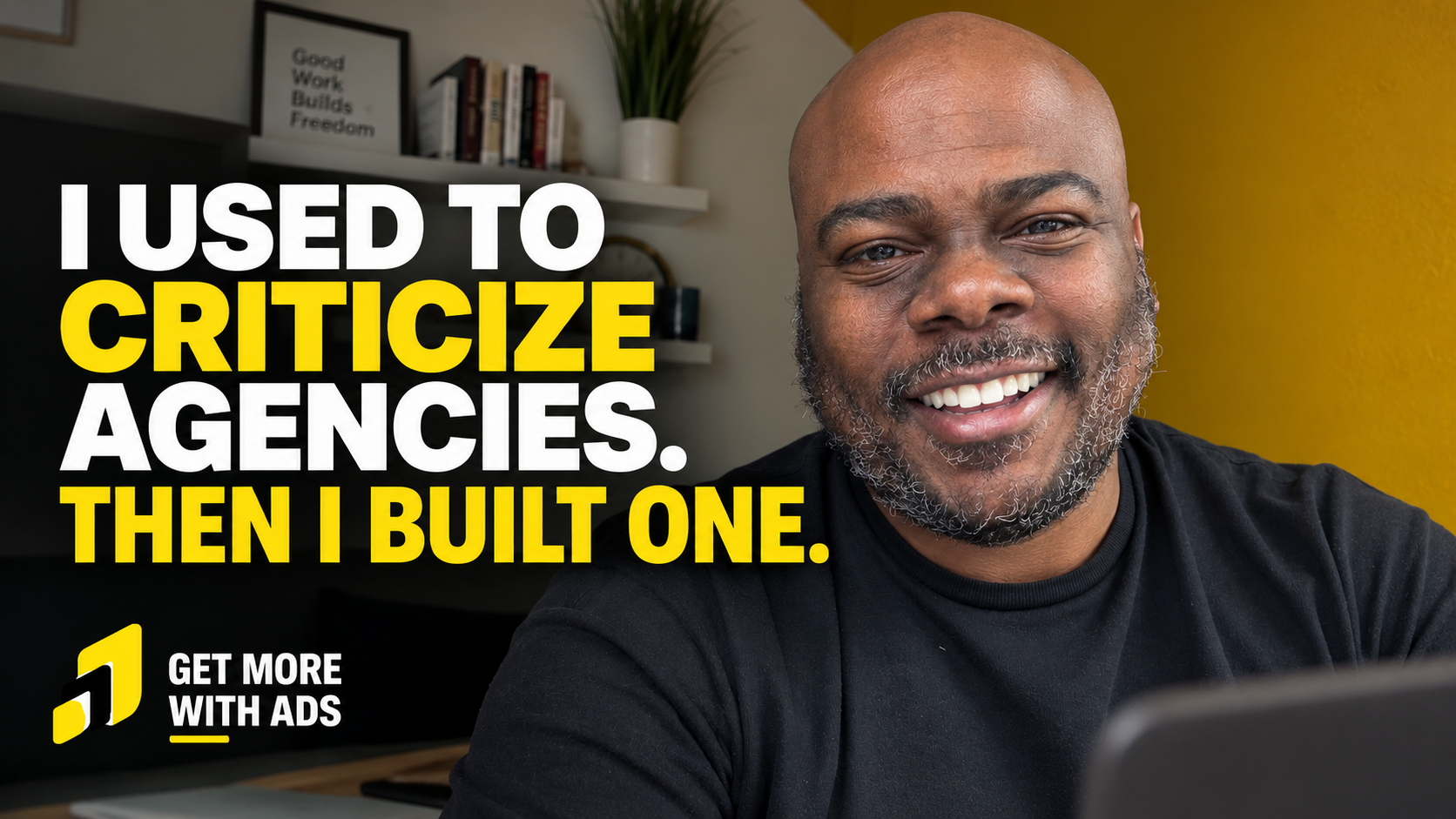
Why I Built the Agency I Used to Criticize
I spent years publishing anti-agency content. Here's what actually changed my mind, and what didn't.
I used to publish anti agency content. Now I am building an agency.
I know how that looks.
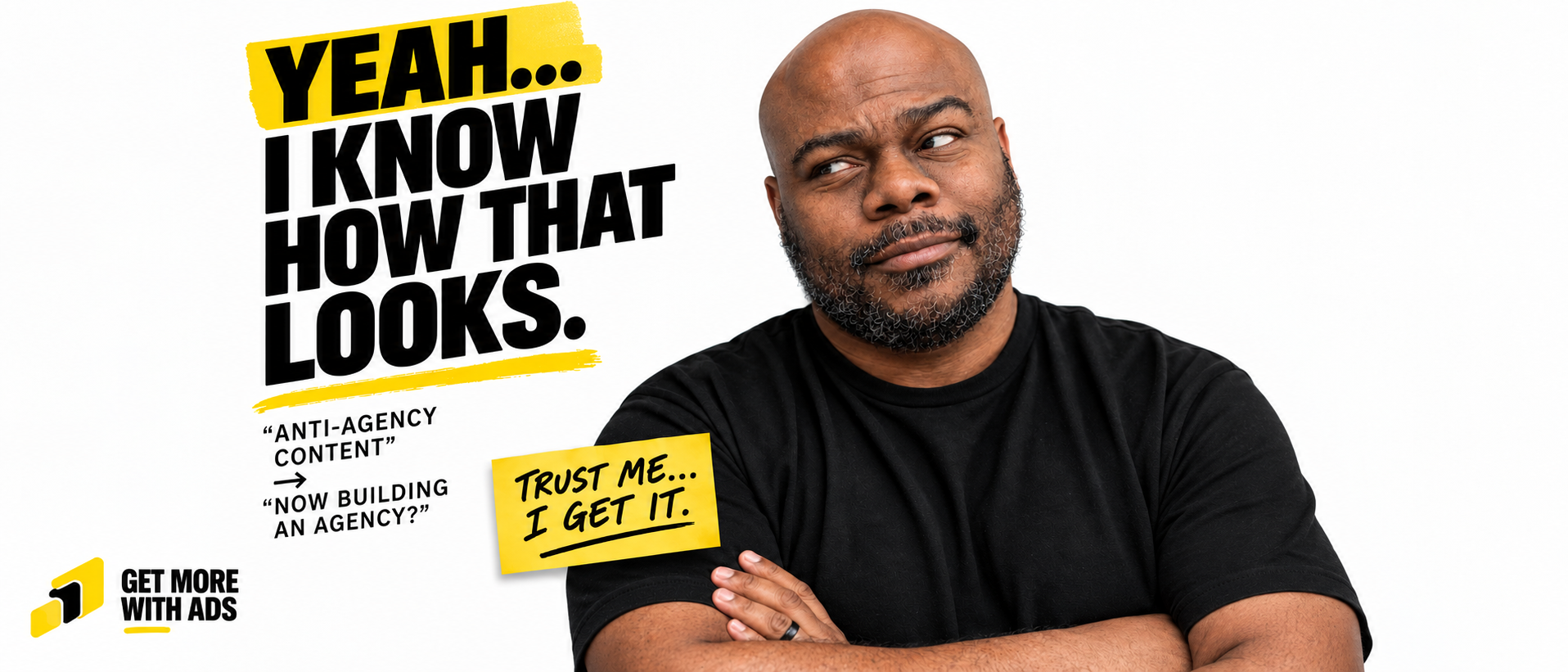
But I do not want to clean the story up just to make the transition easier to sell. I said what I said because of what I had seen. Some of those beliefs changed. A lot of them did not. What changed was not my standard for how clients should be treated. What changed was my belief about the vehicle.
I spent time inside a boutique DTC agency managing eight to twelve accounts at once. I saw smart people work hard. I also saw what happens when activity starts getting confused with strategy. One account still sticks with me. The account was moving in the right direction. I was making slower adjustments, testing with a reason, and giving the platform room to learn. Then came the pressure to do more.
Change the headline. Swap the creative. Adjust the budget. Try another audience.
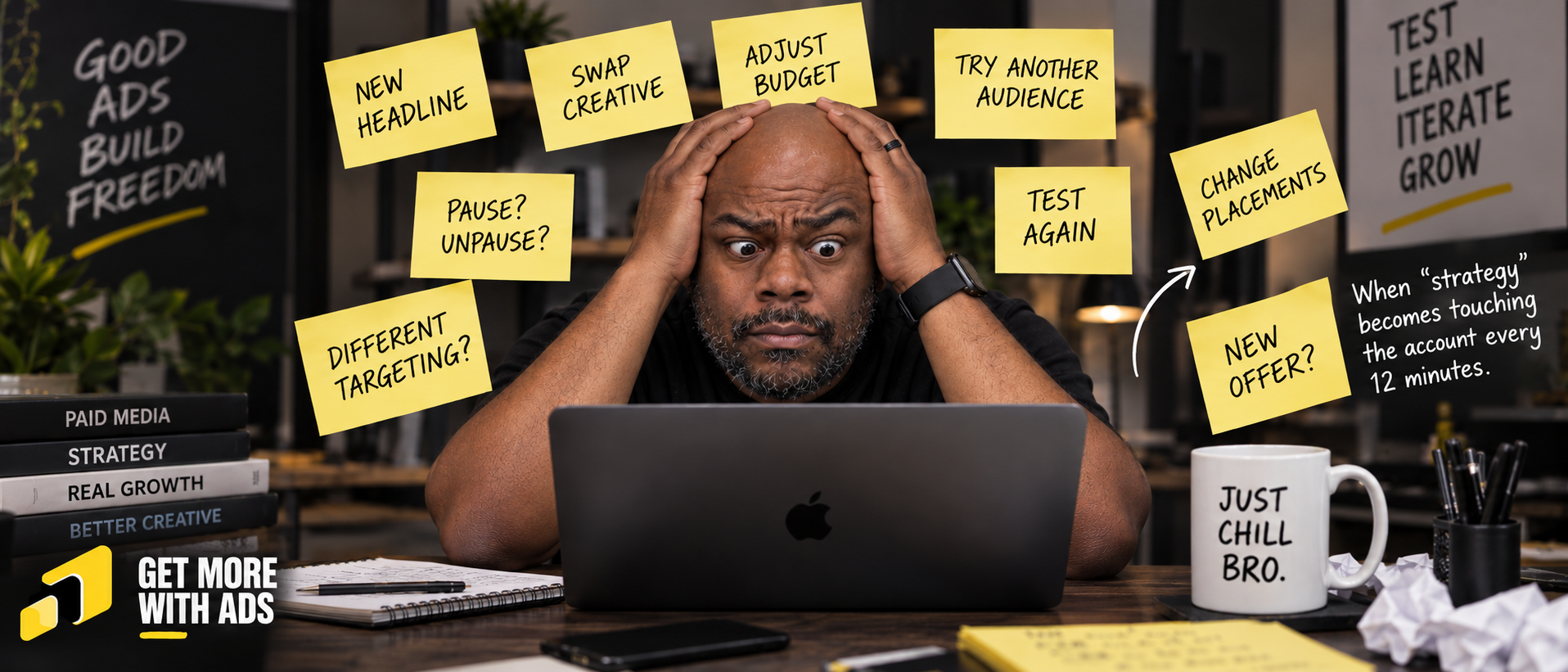
My question was simple: if the account is already working, why keep touching it just to prove we are working?
Other media buyers were making more changes. People would ask why I was not doing as much. My answer was, “I do not need to.” That was not laziness. It was restraint. I remember clients saying that once I took over, the account started slowly trending in the right direction.
That taught me something I still believe today. An agency owes the client reciprocity. You are working with somebody else’s money. That founder may be paying payroll, vendors, inventory, rent, and your retainer at the same time. You do not get to treat their ad account like a sandbox. If you make a decision that hurts performance, own it.
That is what my anti agency content was really about. I was not against agencies existing. I was against the version of agency life where the sale gets more attention than the service. I was against big promises used to get a client through the door, followed by generic execution once the contract was signed. I was against churn being treated like normal. I was against rebuilding a working account because somebody had a playbook they used on every client. And I was against pretending we knew what results a client would get before we had enough information to know.
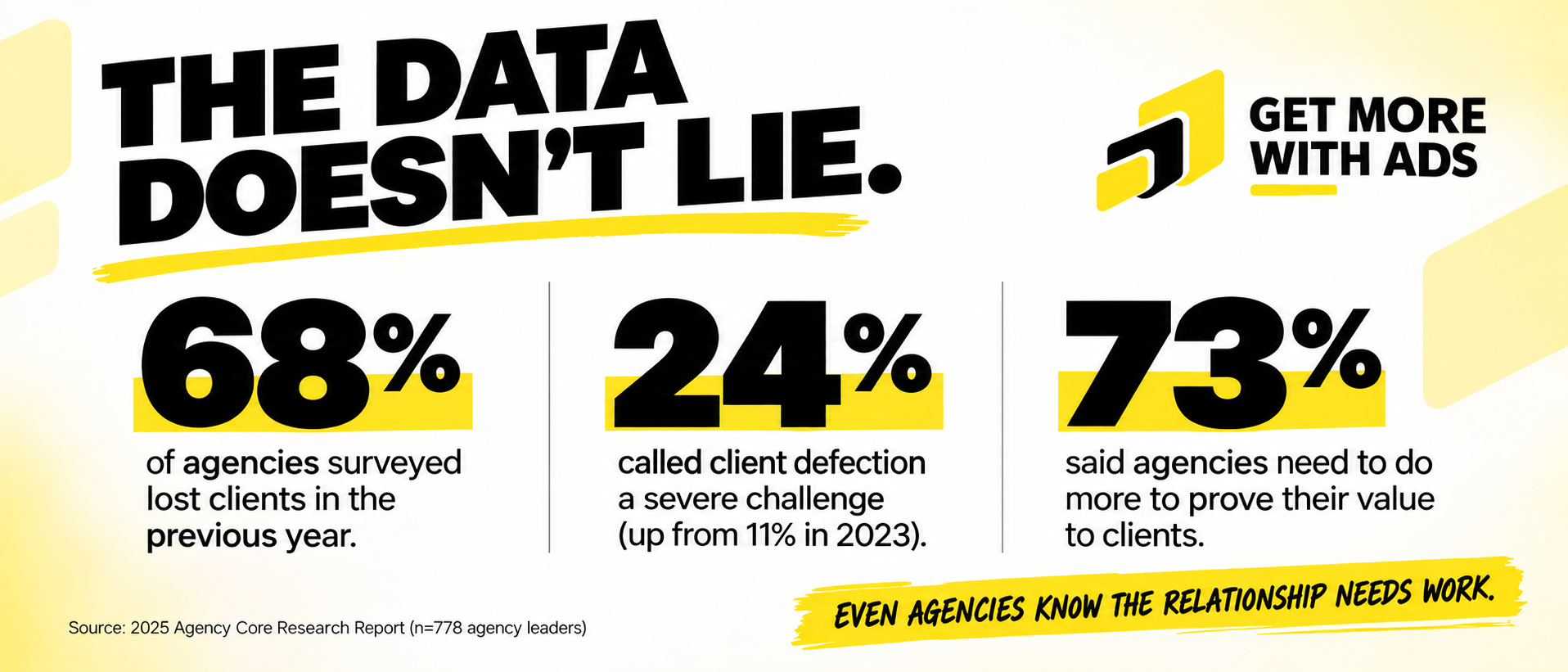
The industry data tells me that tension is real. A 2025 survey of 778 agency leaders found that 68% said their agencies had lost clients in the previous year. Twenty-four percent called client defection a severe challenge, up from 11% in 2023. Seventy-three percent said agencies need to do more to prove their value to clients. That does not mean agencies are bad. It means agencies themselves know the relationship between client and agency needs work. (Agency Management Institute)
What changed for me was realizing the answer was not avoiding agencies. It was building one differently.
Part of that shift came from confronting my own limitations. I know paid media. I know how to structure accounts, read data, build messaging, manage budgets, and guide creative strategy. But there were times when I could see the next problem and could not solve it alone.
Creative was a big one. You can be great inside Ads Manager and still hit a ceiling when one or two pieces of creative are doing all the work. At that point, changing targeting and budgets only gets you so far. You are asking media buying to solve a creative problem.
That is not just something I have felt in accounts. A 2026 Interconnections study looked at 368 Meta creatives across 15 DTC brands, covering more than 48 million impressions and $685,791 in spend. The top 10% of creatives carried 68% of the spend. (Interconnections)
Man, that looks familiar.
A small number of ads often do the heavy lifting. I kept running into that problem, and I needed somebody who could own creative at a level I could not. Connecting with James changed what was possible. He could own the creative side while I stayed close to media buying, data, messaging, and account strategy.
That is when the agency model started making sense. Not because I suddenly decided agencies were great. Because I realized a team could serve the client more completely than I could alone.
I also experienced the agency problem from the client side. I paid an agency. I heard the promises. Once the work started, the experience felt familiar. The process was rigid. Expectations had been set too high. When the situation needed flexibility, there was not much room for it.
That reinforced something for me: service matters as much as tactics.
Get More With Ads came out of that belief. Paid media, creative, and retention should not operate like separate vendors speaking different languages. The person running ads should influence creative with data. Creative should give the media buyer new angles to test. Retention should help tell us whether we are acquiring customers who become good customers. Those pieces need to talk to each other.
That is also where CORE comes in. CORE is the framework I built around four questions: Customer, Offer, Results, and Engagement. Who is the customer we are actually trying to reach? Is the offer strong enough for that customer? What are the results actually telling us? What happens after the person clicks, buys, or enters the customer journey?
Because a paid ads problem is not always a paid ads problem.
You can see that frustration in DTC communities too. One skincare founder recently described spending months testing Meta ads and still not knowing whether the real issue was creative, offer positioning, account structure, traffic quality, landing page mismatch, or fatigue. (Reddit)
That is the kind of anxiety I want to reduce.
Before changing everything, diagnose the problem. Maybe the ad is getting attention but the landing page is not closing. Maybe the offer is weak. Maybe the customer is wrong. Maybe the creative is tired. Maybe the ads are the problem.
Fine. Find the leak first.
I have used that approach in real DTC work. On one apparel account, products generally sold for about $70 to $125 depending on the sale. Previous advertising attempts were producing CPAs around $150 to $300.
That math is ugly.
I owned the media buying, campaign structure, budget decisions, creative strategy, messaging, targeting, and reporting. We changed the messaging, structure, and targeting. We brought the founder into the ads. I applied CORE across the work instead of treating every decision like an isolated tactic. CPA came down. Conversions increased.
I went back and isolated only the campaigns attributable to my work. No account wide totals. No other campaigns mixed in. Those campaigns spent $11,457.63 and generated 240 purchases, which works out to a blended CPA of about $47.74.
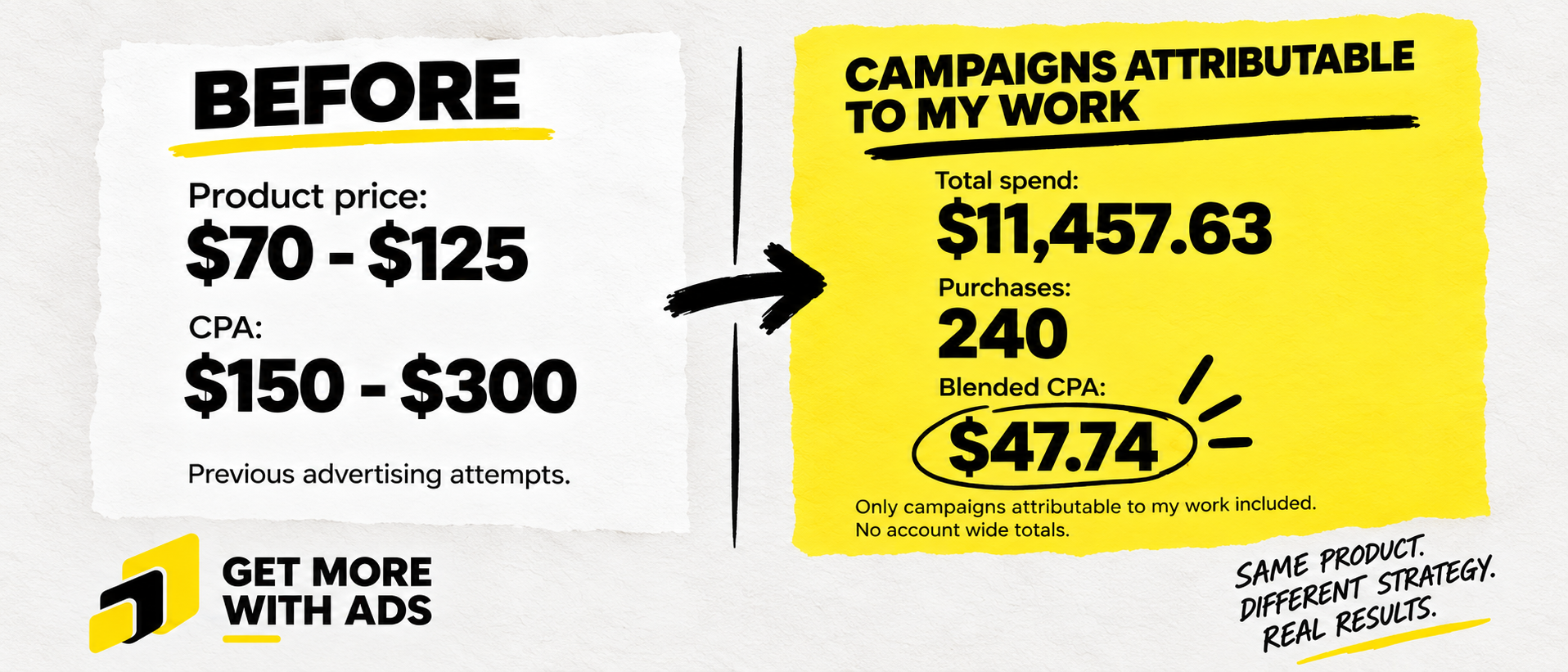
The client later copied campaign structures I had built to launch new ads and continued getting strong CPAs.
That matters to me more than one lucky ad. There was a way of thinking behind the work.
That is what I want Get More With Ads to protect as we grow. I do not want us making changes because Tuesday feels too quiet. I do not want clients getting long reports full of actions while their business moves backward. I do not want us chasing whatever tactic is loud online that week.
I want to calm the hype.
Media buying already has enough natural volatility. Results move. Costs rise. Costs fall. Creative fatigues. Platforms change. A founder does not need an agency adding more anxiety because the team cannot sit still.
Calm does not mean passive. It means we move when the data gives us a reason to move. We protect what is working while we build what could outperform it. We know the number the client actually needs before celebrating platform metrics that do not matter to the business. And when something is on us, we say it is on us.
Get More With Ads is not built for every DTC brand. If the margins do not support paid acquisition, ads cannot repair the economics. If the product has not shown enough demand, more spend may only make the problem more expensive. If fulfillment is broken and nobody is fixing it, adding customers can make things worse. And if a founder refuses to collaborate when the data points to a problem outside the ad account, we are probably not the right partner.
I want clients who can handle an honest conversation. The goal is not to win the argument. The goal is to find the leak.
I used to look at bad agency behavior and think, “I do not want to be part of that.” Now I look at the same problems and think, “Then build it differently.”
I am still skeptical of the big promise. I am still skeptical of cookie-cutter strategy. I still think changing an account every day just to show a client that you are busy is a horrible way to manage their money.
But I no longer believe the agency itself is the problem. The problem is how you choose to operate it.
That is what Get More With Ads is about. Not magic. Not guarantees. A clear system, a connected team, and a way to diagnose what is actually happening without turning every bad day into a crisis.
If you are a DTC founder with proof that people want your product, margins that can support growth, the ability to fulfill demand, and a willingness to collaborate, let’s talk. I am not going to promise you a number before seeing the account. I want to understand what is working, where the pain is, what gap you are trying to close, and whether we are actually the right team to help close it.
That is the agency I wanted to find.
So I decided to build it.

Redefine Success
It All Begins Here
Confidence doesn’t always arrive with a bold entrance. Sometimes, it builds quietly, step by step, as we show up for ourselves day after day. It grows when we choose to try, even when we’re unsure of the outcome. Every time you take action despite self-doubt, you reinforce the belief that you’re capable. Confidence isn’t about having all the answers — it’s about trusting that you can figure it out along the way.
The key to making things happen isn’t waiting for the perfect moment; it’s starting with what you have, where you are. Big goals can feel overwhelming when viewed all at once, but momentum builds through small, consistent action. Whether you’re working toward a personal milestone or a professional dream, progress comes from showing up — not perfectly, but persistently. Action creates clarity, and over time, those steps forward add up to something real.
You don’t need to be fearless to reach your goals, you just need to be willing. Willing to try, willing to learn, and willing to believe that you’re capable of more than you know. The road may not always be smooth, but growth rarely is. What matters most is that you keep going, keep learning, and keep believing in the version of yourself you’re becoming.

Small Steps Create Big Shifts
It All Begins Here
Confidence doesn’t always arrive with a bold entrance. Sometimes, it builds quietly, step by step, as we show up for ourselves day after day. It grows when we choose to try, even when we’re unsure of the outcome. Every time you take action despite self-doubt, you reinforce the belief that you’re capable. Confidence isn’t about having all the answers — it’s about trusting that you can figure it out along the way.
The key to making things happen isn’t waiting for the perfect moment; it’s starting with what you have, where you are. Big goals can feel overwhelming when viewed all at once, but momentum builds through small, consistent action. Whether you’re working toward a personal milestone or a professional dream, progress comes from showing up — not perfectly, but persistently. Action creates clarity, and over time, those steps forward add up to something real.
You don’t need to be fearless to reach your goals, you just need to be willing. Willing to try, willing to learn, and willing to believe that you’re capable of more than you know. The road may not always be smooth, but growth rarely is. What matters most is that you keep going, keep learning, and keep believing in the version of yourself you’re becoming.

Turn Intention Into Action
It All Begins Here
Confidence doesn’t always arrive with a bold entrance. Sometimes, it builds quietly, step by step, as we show up for ourselves day after day. It grows when we choose to try, even when we’re unsure of the outcome. Every time you take action despite self-doubt, you reinforce the belief that you’re capable. Confidence isn’t about having all the answers — it’s about trusting that you can figure it out along the way.
The key to making things happen isn’t waiting for the perfect moment; it’s starting with what you have, where you are. Big goals can feel overwhelming when viewed all at once, but momentum builds through small, consistent action. Whether you’re working toward a personal milestone or a professional dream, progress comes from showing up — not perfectly, but persistently. Action creates clarity, and over time, those steps forward add up to something real.
You don’t need to be fearless to reach your goals, you just need to be willing. Willing to try, willing to learn, and willing to believe that you’re capable of more than you know. The road may not always be smooth, but growth rarely is. What matters most is that you keep going, keep learning, and keep believing in the version of yourself you’re becoming.

Make Room for Growth
It All Begins Here
Confidence doesn’t always arrive with a bold entrance. Sometimes, it builds quietly, step by step, as we show up for ourselves day after day. It grows when we choose to try, even when we’re unsure of the outcome. Every time you take action despite self-doubt, you reinforce the belief that you’re capable. Confidence isn’t about having all the answers — it’s about trusting that you can figure it out along the way.
The key to making things happen isn’t waiting for the perfect moment; it’s starting with what you have, where you are. Big goals can feel overwhelming when viewed all at once, but momentum builds through small, consistent action. Whether you’re working toward a personal milestone or a professional dream, progress comes from showing up — not perfectly, but persistently. Action creates clarity, and over time, those steps forward add up to something real.
You don’t need to be fearless to reach your goals, you just need to be willing. Willing to try, willing to learn, and willing to believe that you’re capable of more than you know. The road may not always be smooth, but growth rarely is. What matters most is that you keep going, keep learning, and keep believing in the version of yourself you’re becoming.